

Getting sick while traveling internationally is something most people never expect. One moment you’re enjoying your trip, and the next you’re searching online for a doctor abroad, trying to understand local healthcare systems, or wondering where to find reliable medical help in a country you don’t know well.
For U.S. travelers especially, dealing with a medical situation overseas can feel overwhelming. Different languages, unfamiliar clinics, and uncertainty about where to go often make the experience more stressful than it needs to be.
That’s exactly why TMA was created.
TMA provides international medical assistance designed for travelers who want fast access to licensed doctors, emergency coordination support, and real medical guidance while abroad. Instead of trying to figure everything out alone, travelers can activate support quickly and receive assistance when they need it most.
Whether you need to see a doctor abroad for food poisoning, flu symptoms, a minor injury, or an unexpected medical situation, knowing what to do ahead of time can make your trip far less stressful.
Why Finding a Doctor Abroad Can Be Difficult
When you feel unwell in another country, even simple decisions become harder.
Questions like:
- “Should I go to a clinic?”
- “Can I speak to a doctor online first?”
- “Where can I find an English-speaking doctor?”
- “What if I can’t leave my hotel?”
- “Who do I contact during an emergency?”
can quickly create panic—especially if you’re traveling alone or visiting a country for the first time.
Many American travelers also assume healthcare abroad works the same way it does in the United States. In reality, every country handles medical situations differently. Some destinations rely heavily on local pharmacies, while others may require appointments or private clinics for international visitors.
That’s why many travelers now use a travel medical assistance plan before departure.
With TMA, travelers can access:
- 24/7 medical assistance
- Fast doctor coordination
- Telemedicine support
- Emergency medical guidance
- Doctor visits to hotels or Airbnb accommodations in supported destinations
You can learn more about how the service works in the complete
Travel Medical Assistance Guide
Common Reasons Travelers Need Medical Help Abroad
Not every situation requires a hospital visit. In fact, most travelers simply need fast medical guidance and access to a licensed doctor.
Food Poisoning While Traveling
Food poisoning is one of the most common reasons travelers need to see a doctor abroad.
Symptoms may include:
- Nausea
- Fever
- Vomiting
- Stomach pain
- Dehydration
Instead of searching for clinics while feeling sick, TMA helps travelers connect with licensed doctors quickly and receive immediate medical guidance.
In many cases, travelers can first speak with a doctor remotely before deciding whether an in-person visit is necessary.
Flu Symptoms and Respiratory Infections
Long flights, crowded airports, climate changes, and fatigue can weaken the immune system during travel.
Many travelers abroad need medical support for:
- Sore throats
- Flu symptoms
- Ear infections
- Bronchitis
- Sinus infections
With TMA’s doctor-on-call assistance, travelers can access medical guidance without spending hours trying to navigate an unfamiliar healthcare system.
Minor Injuries During Travel
Accidents happen during vacations and business trips all the time.
A fall while sightseeing, a sprained ankle, or a minor injury during an excursion may not seem serious at first—but getting evaluated by a doctor abroad can help prevent complications.
TMA helps coordinate medical support quickly so travelers can focus on recovery instead of logistics.
Allergic Reactions
Travel exposes people to new foods, environments, medications, and allergens.
If you experience unexpected symptoms while abroad, immediate medical guidance can help you understand the next steps and whether urgent care is necessary.
What to Do If You Need to See a Doctor Abroad
When you start feeling unwell during a trip, staying calm is important.
Here are the first steps travelers should take.
Step 1: Evaluate the Situation
Ask yourself:
- Is this an emergency?
- Are symptoms worsening?
- Can I remain safely at my accommodation?
- Do I need immediate medical attention?
For severe emergencies, travelers should always contact local emergency services immediately.
For non-life-threatening situations, TMA can help travelers activate medical assistance quickly and receive guidance on the next steps.
Step 2: Contact TMA for Medical Assistance
Trying to search online for clinics while sick in another country can become exhausting very quickly.
With a TMA travel medical assistance plan, travelers can access:
- Licensed doctors
- Telemedicine consultations
- Emergency coordination support
- Medical guidance abroad
- Help finding local medical assistance
Instead of dealing with the stress alone, travelers receive organized support designed specifically for international travel situations.
You can explore available
Travel Medical Assistance Plans
before your next trip.
Step 3: Prepare Important Medical Information
Before speaking with a doctor abroad, keep the following information accessible:
- Passport
- Current medications
- Allergy information
- Existing medical conditions
- Emergency contact details
- Hotel or Airbnb address
This helps speed up the assistance process and allows doctors to provide more accurate medical guidance.
Telemedicine Makes It Easier to See a Doctor Abroad
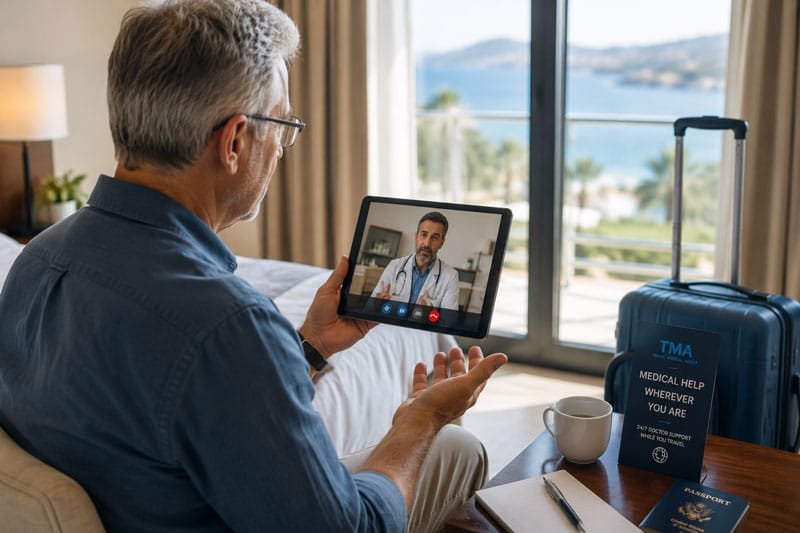
One of the biggest changes in international travel healthcare is the rise of telemedicine.
Many medical situations do not immediately require a hospital or clinic visit. Travelers often simply need:
- Professional medical guidance
- Help understanding symptoms
- Advice about medication
- Recommendations on whether in-person care is necessary
TMA’s telemedicine support allows travelers to speak with licensed doctors quickly while abroad.
For U.S. travelers, this can significantly reduce stress—especially when dealing with language barriers or unfamiliar healthcare systems.
Instead of trying to navigate everything alone, travelers can receive real-time medical assistance directly from their hotel, Airbnb, or vacation rental.
Doctor Visits to Your Hotel or Airbnb
One of the most stressful parts of getting sick abroad is leaving your accommodation while feeling unwell.
In supported destinations, TMA may help coordinate doctor visits directly to your hotel or Airbnb.
This can be especially helpful for:
- Families traveling with children
- Elderly travelers
- Solo travelers
- Travelers experiencing severe fatigue or dehydration
- Business travelers on tight schedules
For many travelers, having access to medical help at their accommodation provides enormous peace of mind during international trips.
You can review supported destinations and service availability here:
Coverage & Supported Destinations
Why U.S. Travelers Use Travel Medical Assistance Plans
American travelers are increasingly looking for faster and more organized ways to access medical help abroad.
A TMA travel medical assistance plan complements your travel insurance by providing direct medical support when you need it most.
Instead of waiting until a situation becomes overwhelming, travelers can access:
- Fast activation
- 24/7 emergency medical support
- Doctor-on-call assistance
- Medical coordination
- Telemedicine support abroad
TMA is not an insurance replacement. It works alongside your travel insurance and adds an extra layer of medical assistance during international travel.
This approach helps travelers feel more prepared before departure and more confident while abroad.
How to Prepare Before Your Trip
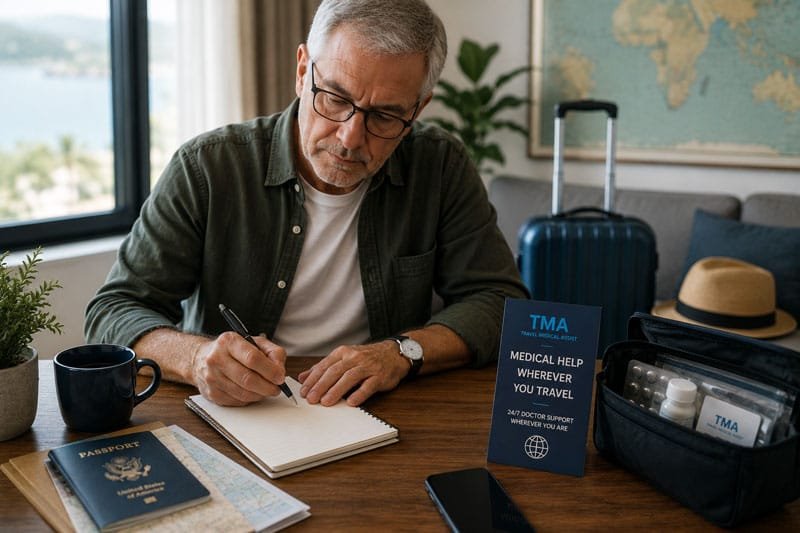
The best time to prepare for a medical situation abroad is before your flight.
Save Important Contact Information
Before traveling internationally:
- Save TMA contact details
- Keep emergency numbers accessible
- Store your hotel address digitally
- Save copies of important documents
Preparation can make emergencies much easier to manage.
Pack Essential Medications
Travelers should always bring:
- Prescription medications
- Basic first-aid supplies
- Allergy medication
- Motion sickness medication
- Copies of prescriptions
Keep medications in your carry-on luggage during flights.
Activate Medical Assistance Before Departure
Many travelers wait until something goes wrong before thinking about medical support abroad.
Having a travel medical assistance plan already active before departure allows travelers to access support immediately if a medical situation happens during the trip.
You can learn more about activation and support options here:
How TMA Works
What Travelers Should Avoid During a Medical Situation Abroad
Don’t Ignore Symptoms
Minor symptoms can become more serious if left untreated during travel.
Seeking medical guidance early often helps travelers recover faster and avoid additional stress during their trip.
Don’t Rely Only on Online Searches
Searching “doctor abroad near me” while sick in another country may lead to confusion, unreliable information, or difficulty finding English-speaking assistance.
TMA helps travelers avoid that uncertainty by coordinating medical support directly.
Don’t Wait Until the Situation Feels Overwhelming
One of the biggest mistakes travelers make is waiting too long before asking for medical help abroad.
Fast medical guidance can help travelers make better decisions early and avoid unnecessary complications later.
Travel with More Confidence Abroad
Medical situations can happen anywhere—even during carefully planned vacations.
But getting sick abroad does not have to turn into chaos.
With TMA, travelers can access fast medical assistance, speak with licensed doctors, receive emergency coordination support, and get help navigating healthcare systems in unfamiliar destinations.
Whether you need telemedicine support, medical guidance, or help arranging a doctor visit abroad, TMA is designed to help travelers feel more prepared and supported throughout their journey.
If you’re planning an international trip, exploring a travel medical assistance plan before departure can make traveling abroad feel significantly less stressful.
For additional questions about services and support, visit the
TMA FAQ page.